
Revolt Energy Recovers Solar Infrastructure
Revolt Energy is a solar panel recycling company operating in the United Kingdom and the United States. From our facilities in the Humber region (UK) and Texas (US), we transform end-of-life solar panels into new resources.With deep tech innovation at its core, ReVolt achieves unrivaled recovery through a specialized and proprietary mechanism exclusive to the ReVolt technology.During the lifetime of any solar installation, panels may be damaged by hail, storms, or natural wear. ReVolt ensures these panels are responsibly recovered, recycled, and reintegrated into manufacturing supply chains.We serve municipal programs, utility-scale developers, investors, and commercial partners, and we even pay our customers for their end-of-life solar panels.Our technology combines photonics, robotics, and advanced manufacturing to create a fully automated, high-integrity recycling solution. Our patented technology has been developed in-house by world experts.
A Global Vision
We currently accept end of life solar modules and decommissioning projects in our facilities approved by the regulators in the US and in Europe. We plan to have operational hubs on every continent by 2030.
The ReVolt Global Solar Waste Tracker
Revolt have developed a proprietary software called the Global Solar Waste Tracker. Our software is a live forecasting platform that maps where and when the world's panels reach end-of-life and quantifies the material value embedded in that coming wave.Together, the recovery technology and the data turn an invisible, deferred liability into a plannable, financeable asset for asset managers. When retiring a solar farm generates income instead of a disposal bill, circularity stops being a compliance exercise and becomes the obvious economic choice.
Our Promise
High-integrity recovery
Compliance with local current and future regulations
Total transparency and traceability and issuance of certificate
Sustainable, low-carbon circular solution for the solar industry
10% Revenue share for the value of recovered materials (at least)

Subscribe to our Newsletter
Stay informed on solar recycling breakthroughs, sustainability best practices, and Revolt Energy updates.
SOLUTIONS
Transforming Solar Waste
Into Clean-Industry Resources
Revolt’s patented technology recovers valuable materials found in all major solar panel types.Competitors and other recycling companies will attempt to align their process with ReVolt’s benefits or performance, but this is not possible because ReVolt owns an exclusive, proprietary process engineered by ReVolt to outperform and go beyond the limitations of other processes.
These materials fuel industries such as defense, aviation, space, energy, electronics, and quantum technology.
Solving the Solar Waste Challenge
Solar investments are vital, but manufacturing impacts and end-of-life waste remain major environmental issues. Many panels sit unused in fields or end up in landfills, and impact investors are at risk of non-compliance.Revolt addresses this through:
Container-based collection systems
Patented material separation technology
Reintegration into global supply chains via partners
Revenue generation with our revenue share model
Our process ensures panels are reused at their highest value, supporting a cleaner and more resilient future.

Aluminum
Electronic grade Silicon
Silver
Copper
Cadmium
Tellurium
Gallium
Indium
High-grade glass
Plastics
SERVICES
Three Specialized Recycling Service Models
1. Urban Solar Recycling
We partner with municipalities to deploy secure, IoT-enabled drop-off containers. Residents can deposit solar panels using our intuitive Revolt mobile app.

2. Utility-Scale and Industrial Recycling
Designed for solar developers, utilities, and asset managers.We provide on-site Revolt containers for damaged, aged, or warranty-affected panels.
To minimize downtime, we also supply a container stocked with replacement panels ready for immediate installation.
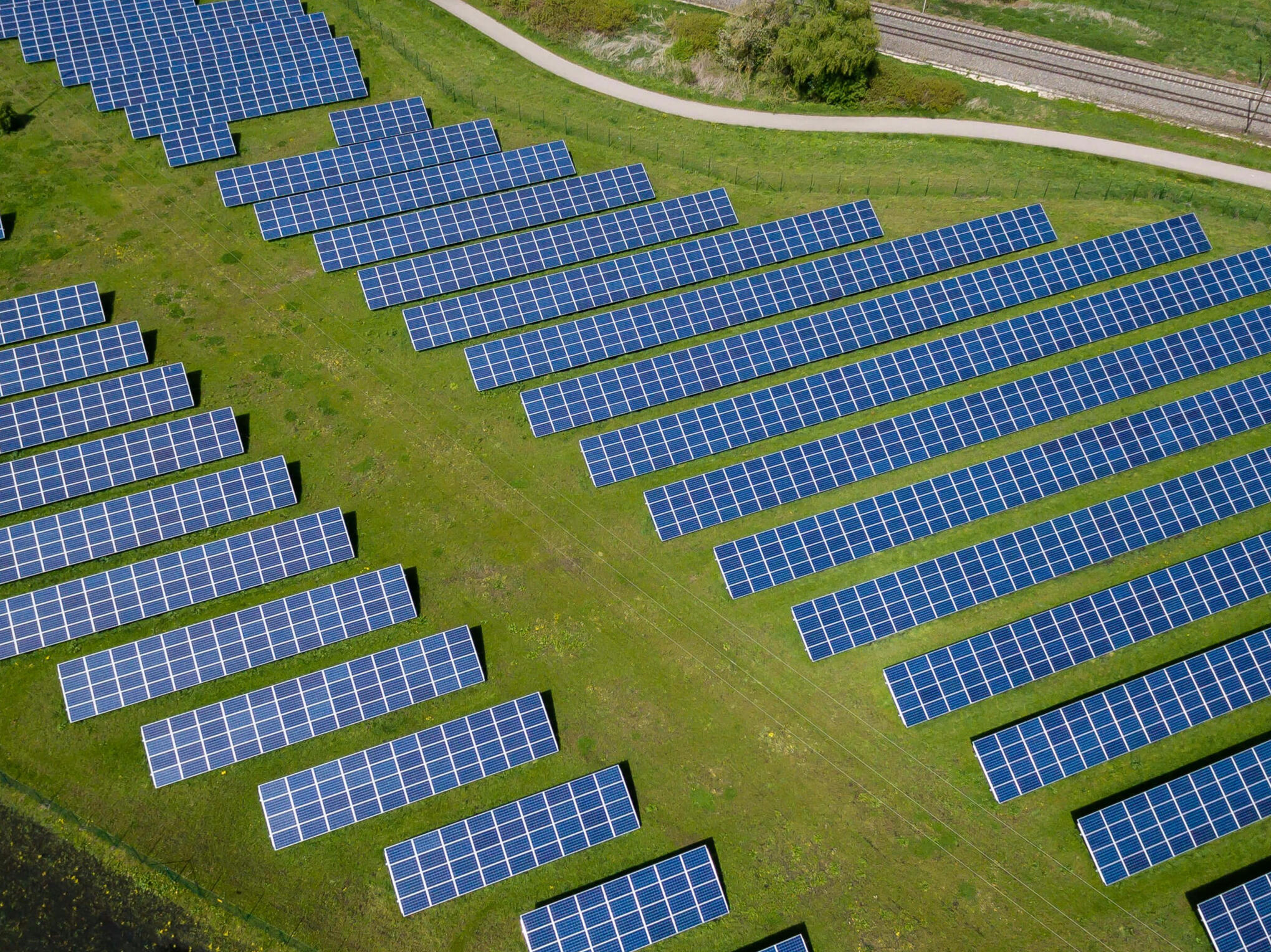
3. Decommissioning & Repowering
Revolt partners with utility-scale solar arrays nearing end-of-life and manages:
Panel removal and site clearing
Material recovery
Repowering or reintegration
This process reduces operational burden and maximizes returns for long-term PV investments.

WHY REVOLT?
The Most Advanced Solar Recycling Partner
Revolt is developing a patented, groundbreaking technology that achieves 99% recovery at up to 99.9% purity, validated by independent third parties.We develop all our technologies in-house, so that we can scale as quickly as we need to in the future.We are very focused on automation, robotic enablement, data traceability and high throughput.
The ReVolt Global Solar Waste Tracker
Revolt have developed a proprietary software called the Global Solar Waste Tracker. Our software is a live forecasting platform that maps where and when the world's panels reach end-of-life and quantifies the material value embedded in that coming wave.Together, the recovery technology and the data turn an invisible, deferred liability into a plannable, financeable asset for asset managers. When retiring a solar farm generates income instead of a disposal bill, circularity stops being a compliance exercise and becomes the obvious economic choice.To book a demo of our tracker, email us at [email protected]

Transportation & Logistics

Fast, safe transport for panels using our secure container system, from installation damage to lifetime replacements.
Revenue Sharing Model

Revolt is the only known company that shares revenue from recycled material, improving ROI for solar assets.
Carbon Credit Generation

Your operations benefit from shared recycling-related carbon credits, reducing total carbon footprint.
Circular Reintegration

Recovered materials are reused in industries such as:
Solar panel manufacturing
Defense
Aviation
Space
Quantum computing
Traceability

Every kilogram of recycled material comes with certificate of circularity, showing its origin, composition, and lifecycle journey.Integrity, transparency, and sustainability are guaranteed.
Our Materials
Source Materials You Can Trust
Sustainable supply chains rely on transparency and consistency.ReVolt recovers critical minerals from utility-scale, industrial, and roof-top solar infrastructure and reintegrates the materials in local supply chains.
Certified, Tested, Secure
We recover six core materials from solar modules:
Aluminium (frames) - 6000 series alloys. c. 1,000t in 2027
Glass cullet - c. 4,400t in 2027 (test results available)
Silver - Refined externally (c. 8.5t available in 2028)
Silicon - Solar grade purity (c. 900t in 2028)
Copper - Bare bright (c. 26t in 2027)
Polymer - JBox, Backsheets, Cable insulation
Capacity and Operations
Currently building our proprietary AI powered robots
Frame removal operations starting in January 2027
Throughput of 150,000 modules per line in 2028 (2 lines planed)
UK and Texas sites are both permitted and ready to receive modules (60,000 in 2026)
Certifications
Pursuing ISO 14001, and 27001. All Currently ongoing.With Revolt, you can secure consistent levels of high purity materials, with full traceability from its original source.If you want to secure consitent quality secondary raw commodities ahead of time, contact us at [email protected].



ABOUT THE TEAM
Pioneering the Future of Solar Recycling
Revolt Energy was founded by global sustainability experts and scientists committed to accelerating circular innovation.Our patented technology recovers almost all materials from the panels, outpacing the industry standard. Our technology splits all materials and we engage with the supply chains of various industries in the regions we operate to provide less carbon intensive materials to industry.
Interested in a Critical Minerals Recovery?
Join us and contribute to a truly sustainable clean energy sectorAt ReVolt Energy, we are quietly redefining the future of solar by transforming end-of-life panels into a reliable domestic source of critical minerals. In an industry racing toward greater sustainability, our work ensures that today’s clean-energy infrastructure does not become tomorrow’s waste.
If you are drawn to work that delivers genuine environmental and economic impact, helping close the loop on the solar supply chain and strengthening America’s clean-energy independence, we invite you to explore the difference you could make here.
Discover our open roles on the Careers page and join a team committed to building a truly circular solar economy.
Our Mission
“ReVolt is more than a solar-end-of-life recovery company, we have developed collection networks with municipalities and utility-scale and industrial solar companies to ensure that all panels are recovered and not sent to landfill.Our state of the art technology allows us to recover nearly 100% of materials with a near 100% purity level. That means that we have a unique ability to reintegrate each element into the manufacturing supply chain, make solar end-of-life recovery income generating, and ensure full circularity of the solar industry.Our promise is to recover all solar equipment with a high level of integrity, ensuring sustainable and safe delivery of valuable metals and critical minerals.” — CEO, Revolt Energy
INVESTOR RELATIONS
Partner With a Global Leader in Solar Circularity
Revolt Energy is positioned at the frontier of renewable infrastructure: recycling the solar panels that will power the next generation of global energy. With patented technology, near-total material recovery, and breakthrough purity levels, Revolt operates in one of the most essential and fastest-growing sustainability markets.We offer investors not only a strong business model, but a stake in the future of clean-energy materials.
Why Invest in Revolt Energy
1. Patented, Third-Party Validated Technology
Our process achieves 99% recovery with 99.9% purity, setting new global standards for solar recycling.2. Massive Market Demand
Hundreds of millions of solar panels will require recycling in the next two decades. Governments worldwide are mandating proper disposal, creating a rapidly expanding, regulation-driven market.3. Revenue-Generating Model
Revolt is the only company known to share revenue from recycled materials with clients, making us the preferred partner for utilities, cities, and developers.4. Carbon Credit Integration
Recycling generates significant carbon reductions. We share these credits with clients, creating a financial and environmental advantage unmatched in the industry.5. Global Expansion Strategy
With solar installations surging across the U.S., Europe, Asia, and emerging markets, Revolt plans to have a presence on every continent by 2030.6. Traceability & Compliance
Through blockchain certification and compliance with U.S., European, and Asian disposal regulations, Revolt de-risks the supply chain for investors and clients.
Investment Philosophy
Revolt Energy invests in technologies and infrastructure that enable full circularity. Our focus is long-term asset growth, advanced R&D, and global recycling ecosystems that supply critical minerals back into high-tech industries.We are committed to:
Independence
Integrity
Transparency
Responsible stewardship of both capital and natural resources
Industries We Serve
Revolt supplies recovered materials into:
Solar manufacturing
Aerospace
Defense
Energy storage
Electronics & semiconductors
Quantum computing
These sectors rely on materials like gallium, indium, cadmium, tellurium, silicon, and silver, all of which Revolt recovers at high purity.
Investor Contact
Investors may contact our team to request:
Investment decks
Financial documents
Technology briefs
Partnership opportunities
Site visits
Contact: [email protected]
NEWS & INSIGHTS
August 28, 2026
ReVolt Energy joins the University of Texas Energy Institute as an Industry Partner.
August 14, 2026
Interview with Georgia Whitehouse, Group Senior ESG Analyst at Bluefield Partners LLP.
July 13, 2026
Interview with Mool Gupta, Chief Scientific Adviser and inventor at ReVolt Energy.
May 25, 2026
ReVolt Energy Closes Oversubscribed First Investment Round to Supercharge the Solar Circularity Revolution
NewsReVolt Energy joins the University of Texas Energy Institute as an Industry Partner
Austin, August 27th 2026ReVolt Energy has joined the Energy Institute at The University of Texas at Austin as an industry partner. It places us alongside Chevron, ExxonMobil, Shell, ConocoPhillips, Phillips 66, TotalEnergies, Google, Breakthrough Energy, Sabanci Renewables and Korea Southern Power in one of the most consequential energy research communities anywhere, and it puts solar circularity on the table in a room where the future of energy is genuinely being decided.What is the Energy Institute?The Energy Institute is UT Austin's central convener for energy. It does not own a single laboratory. Instead it coordinates the work of more than 450 faculty and research staff across more than 30 energy centers and programs on campus, covering the whole span of how energy is produced, moved and used. The remit is deliberately broad: batteries and critical minerals, clean hydrogen, carbon capture and storage, nuclear, geothermal, industrial decarbonization, the power grid and mobility, water, and the policy and economics that decide which of these things actually get built.It is led by Professor Brian Korgel, Rashid Engineering Regents Chair in the McKetta Department of Chemical Engineering and a member of the National Academy of Engineering, who also directs the NSF funded Center for a Solar Powered Future. That a solar materials chemist sits at the head of the Institute tells you something about where the center of gravity has moved.Why it leads?Three things set the Institute apart from a conventional university research group.It works at the scale of real systems. Its Strategic Energy Seed Grants, worth up to $100,000 a project, fund the early and awkward ideas that no commercial budget will touch. Its larger initiatives operate on infrastructure scale: HyVelocity, the regional clean hydrogen hub for Texas, southwest Louisiana and the Gulf Coast; the Permian Energy Development Lab; the Permian Dialogue, a cooperative methane monitoring network; and multi year studies such as The Future of Geothermal in Texas and Full Cost of Electricity.It convenes. UT Energy Week, held every April, brings faculty, executives, regulators, investors and students into the same building for a week; the 2026 agenda ran across nuclear, data center power and AI infrastructure, geothermal, critical minerals and supply chain security. Alongside it, the UT Energy Symposium has built a public archive of more than 440 recorded lectures.Through the Energy Ventures Practicum, the Texas Entrepreneurship Exchange for Energy, the Jon Brumley Texas Venture Labs and the Genesis startup fund, research at UT does not stop at publication.Then there is location. Texas is the largest energy producing state in the country and, on ERCOT, runs the most instructive grid experiment in the world: enormous wind and solar build out, rapid battery growth, and data center load arriving faster than anyone forecast. Work done in Austin is tested against reality within a few years.Where ReVolt fits?The Institute covers generation, transmission, storage and demand with real depth. What has been thinner, across the whole sector, is the end of the asset life. Panels installed through the 2010s are now retiring in volume, and the default outcome is still landfill.By joining, we gain access to the people: faculty collaboration on the materials science, students who want to spend a career on this, and the chance to test our assumptions in front of an audience that will not be polite about them.
From our founder
"I have been involved with the Energy Institute for several years, speaking at UT Energy Week and taking part in its programs, and I now sit on its advisory board". "The solar industry has spent twenty years getting very good at building. It now has to get equally good at recovering all materials intelligently. As the number one energy hub in the world, Texas, and more particularly Austin is the right place to do this."
InterviewExclusive Interview with Georgia Whitehouse, Group Senior ESG Analyst at Bluefield Partners LLP.

London, August 14th 2026ReVolt Founder: You've built a career at the point where sustainability meets real infrastructure. What first drew you to end-of-life and circularity specifically, rather than the more familiar parts of ESG?Georgia Whitehouse: The reason the circular economy has been a primary focus within my career over the last couple of years is because I believe that it has the potential to be the organising force to bring many different ESG considerations together, whilst driving operational efficiencies and generating long-term value across multiple dimensions. Whether we are thinking about nature or social risks in the supply chain, or how to drive down Scope 3 emissions, making innovative choices about the resources we use and how we use them is pivotal to drive meaningful change and the long-term resilience of the renewables sector.ReVolt Founder: For readers who don't manage assets: when does end-of-life actually first appear on the agenda for a large solar portfolio? Is it a design-stage conversation, or something that surfaces much later?Georgia Whitehouse: Although our starting point was looking for solutions to manage retired PV modules, the “end-of-life” concept is inherently limited as it implies a linear model where waste only becomes a problem at the end of a solar asset’s 25-40 year life. In reality, when you look across the entire value chain of any product, waste and resource inefficiencies arise at every stage. Taking that broader perspective reveals opportunities to embed circular economy principles exist throughout an asset’s lifecycle, across our own operations as well as those of our suppliers and service providers. As circular economy thinking gains momentum within the sector, the challenge is twofold: managing the assets already in operation while also designing new projects with circularity in mind, so that we avoid locking in the waste and resource challenges of the future.ReVolt Founder: The ERALD partnership with Lancaster University set out to map how circular the solar value chain really is. What surprised you most about what you found?Georgia Whitehouse: · One of the most interesting findings from the research was that most of a solar module’s economic value is concentrated in less than 5% of its weight, in materials such as copper, silver and silicon, which really highlights how misleading weight-based recycling targets can be. A recycler today can achieve a very high recovery rate by weight, while still losing many of the most valuable and strategically important materials. This made me realise that we should be focusing not just on how much material we recover, but on recovering critical raw materials at high purity and retaining their value. These materials are essential not only for solar but for a wide range of clean technologies, and as supply chains become increasingly constrained and geopolitically complex, the ability to recover and recirculate them at scale will be critical for long-term resilience.ReVolt Founder: Materials passports come up constantly as the answer to traceability. What has to change in manufacturing, in data-sharing, in procurement, before they're genuinely useful rather than aspirational?Georgia Whitehouse: · The materials passport we developed with Lancaster University for Yelvertoft Solar Farm was introduced at the development stage and we were able to map pretty much everything on site down to component level. However, in terms of getting down to material level, there was a lot of variability in terms of the material composition information manufacturers were able to provide. To enhance traceability and drive circularity, materials passports should be introduced much earlier in the supply chain, so that they capture the materials, their quantities, whether they have any recycled content, their emissions etc. This not only facilitates informed discussions upstream about how we can reduce reliance on critical raw materials, but it also supports downstream recovery processes and retaining value within the resources that are used within solar technologies.ReVolt Founder: Recycling technology has moved quickly in the last few years, from mechanical crushing to chemical processes to laser-based delamination. From an asset owner's perspective, what separates a genuinely high-recovery process from one that just diverts panels from landfill, and where have you seen the most convincing progress?Georgia Whitehouse: · In the UK, the solar PV recycling market has made significant progress in recent years, but it's still relatively small and concentrated among a handful of players. Mechanical separation remains the dominant recycling technology and can recover 90-99% of materials by weight, which is a major achievement. The next challenge is improving the quality, not just the quantity, of recovered materials. Mechanical processes can introduce impurities that limit reuse, so the key innovation opportunity is recovering critical raw materials like silver and silicon in a purer form, allowing them to retain more value and stay in circulation for longer.ReVolt Founder: There's often a gap between policy on paper and what happens on a live site when a panel breaks. From what you've seen, where is that gap widest?Georgia Whitehouse: I think the current WEEE regulations are a key challenge for utility-scale solar. Because solar panels last 25+ years, the money collected from manufacturers when they place equipment on the market today is largely used to manage current waste rather than being set aside for the large volumes of panels that will need recycling in the future. As a result, recycling panels from projects being repowered today, or smaller quantities of damaged modules, can be expensive, even though those costs were intended to be covered when the panels were first sold. The system works well for products like fridges and toasters, where sales and waste volumes broadly align, but it's more challenging for solar at the moment, particularly as technological improvements are leading to panels being replaced earlier than originally expected.ReVolt Founder: If you had to name the single biggest systemic barrier to a circular solar industry (cost, regulation, data, or willingness across the supply chain) which is it, and why that one?Georgia Whitehouse: I think there could be a trade-off between designing solar assets for maximum longevity and designing them for circularity. Many of the features that make modules durable in the field can also make them harder to disassemble and recycle. At the same time, rapid improvements in module efficiency raise questions about whether it is always optimal to design assets for a 25-40 year lifespan. If some assets are likely to be replaced earlier as technology advances, there may be greater scope to design for circularity from the outset. The challenge for the industry is finding the right balance between durability, performance and resource recovery.ReVolt Founder: The WEEE framework was designed for consumer electronics. What would UK regulation look like if it were written for utility-scale PV from scratch?Georgia Whitehouse: If the UK were designing regulation specifically for utility-scale solar from scratch, I would expect it to move away from the current annual WEEE model and towards a true long-term stewardship approach. The key principle would be that funds collected when panels are placed on the market are ringfenced and retained to cover their end-of-life management decades later, rather than being spent on current waste streams.I would also expect greater recognition of the unique characteristics of solar assets. Utility-scale projects are large, traceable installations with known owners and locations, so regulation could require digital tracking of modules throughout their lifecycle, helping to forecast future waste volumes and plan recycling capacity.Finally, the framework should incentivise higher-value recycling outcomes, not just collection and recovery by weight. Recovering critical materials such as silver and silicon in a form that can be reintroduced into UK manufacturing would better support circularity and reduce reliance on virgin resources. In short, I would like to see a system that is long-term, asset-specific and focused on material value retention rather than simply waste management.ReVolt Founder: You took this research to the House of Lords. What did you find policymakers already understood, and what did you have to explain from first principles?Georgia Whitehouse: The idea of recovering materials from UK solar assets and keeping their value within the UK economy really resonated across policymakers. Rather than losing valuable resources to waste or export markets, these materials could be recirculated domestically, supporting investment in advanced recovery facilities and creating skilled jobs. In an increasingly turbulent geopolitical environment, the prospect of a secure domestic supply of secondary, low-carbon materials is particularly attractive. These materials can serve as inputs to British industry, reducing reliance on imported resources while improving economic resilience. When framed in those terms, the circular economy becomes not just an environmental opportunity, but a clear economic and strategic advantage for the UK.ReVolt Founder: What do asset owners actually need from recycling partners for circularity to become the default choice rather than a values-led one?Georgia Whitehouse: An opportunity to benefit from the value of recovered materials. At the moment, the gate fees for recycling are very high, meaning that the choice to elect for high-quality recycling that goes above and beyond legislative weight-based targets (i.e., removing the frames & glass) and targets the recovery of critical raw materials, seems to be predominantly values driven and we need a solution that makes more commercial sense.ReVolt Founder: What advice would you give someone early in their career who wants to work on circularity in renewables?Georgia Whitehouse: Having the ability to think holistically at the systems level is a really important skill to have as it enables you to look across the value chain, identifying the levers for change and the stakeholders you need to engage with, as well as optimising potential environmental and commercial trade-offs. It is important to realise that within a linear economy, decisions made upstream have an impact downstream, so making the system more circular involves new facilitating new forms of collaboration between various supply chain actors, as well as introducing players from other industries and new ideas/innovations.ReVolt Founder: Final question. What are you working on now that you're most excited about?Georgia Whitehouse: We have a lot of exciting work in the pipeline which I can’t say too much about yet, but one area I am currently exploring is the intersection between a circular solar industry and the socioeconomic benefits it could deliver for the UK. If we can demonstrate that circularity not only reduces waste but also supports skilled jobs, strengthens domestic supply chains and retains material value locally, it’s an opportunity for the industry to show that we are not just generating renewable energy, but also managing the resources behind it in a way that supports long-term resilience and growth.
InterviewExclusive Interview with Dr Mool Gupta, Chief Scientific Advisor of ReVolt Energy
University of Virginia July 13th 2026.ReVolt Founder: You've spent decades at the frontier of laser and photonics research, including directing the NSF Laser & Plasma Center. What first drew you to lasers, and what's kept you fascinated all these years?Dr Gupta: My first serious opportunity to use a laser was 49 years ago at the laboratory of the California Institute of Technology in Pasadena, California, for fast imaging, as lasers can produce light beams on a nanosecond time scale. It was an early stage of laser use for various useful applications. Light has always fascinated humans. Lasers provide highly concentrated light that can be sent to the moon and be used in the laboratory. I worked on the use of lasers for storing information, such as on compact disks, and for many other applications. Lasers and photonics are an exciting research area, with many practical applications and significant impact.ReVolt Founder: You've worked across academia, NASA Langley, and industry collaborations. How do you decide which real-world problems are worth pointing a laser at?
Dr Gupta: The first step in the process is to understand the technical challenges in a given field, such as solar energy. Then spend time understanding what approaches other scientists around the world have taken to solve the technical challenges and why the commercial world has not adopted their approaches for the benefit of society. Take the time to think: how can I do better and solve the current problem? Then check your idea and make sure no one has already done it. Then slowly develop the idea further and think through all the problems that I may face in advancing this concept further.ReVolt Founder: For readers who aren't physicists: how would you explain what laser processing can do to a solar panel that conventional methods can't?Dr Gupta: Solar panels are designed to operate for 30 years under normal and extreme weather conditions. So, it is hard to separate solar panel components without breaking them due to the brittle nature of glass and silicon, and to do so economically while handling billions of solar panels. Chemical methods generate chemical waste, and its disposal is a problem; mechanical methods break components; and thermal methods require excessive heat and are slow. The lasers provide a noncontact approach, allowing light energy to be precisely and locally deposited to break chemical bonds. The laser approach eliminates the use of toxic chemicals, uses less energy, and allows the components to be separated without breakage.ReVolt Founder: What makes non-destructive laser treatment of solar panels such a hard technical problem, and what was the breakthrough moment?Dr Gupta: Previously, people did not think of using lasers to address this problem, and the normal approach was to use chemicals, mechanical, and thermal methods. So, first you need to be knowledgeable about lasers and optics. Second, the issue was finding a funding to support such research. The third issue is that there is a variety of lasers and a large number of laser parameters to try. Need to find the proper laser, the laser parameters and find a region where breaking does not occur but delamination occurs. Also, it requires knowledge of laser-material interaction, as each material is different.ReVolt Founder: Billions of panels are heading toward end-of-life in the coming decades. How big a role can technologies like this play in making solar truly circular?Dr Gupta: We have to start somewhere and then grow bigger. Technological solutions are needed to protect the environment and promote resource reuse.ReVolt Founder: Where else do you see laser technology reshaping the energy circularity transition in the next 5–10 years?Dr Gupta: Battery and electronic waste.ReVolt Founder: What convinced you to lend your expertise to ReVolt, and what excites you most about the road ahead?Dr Gupta: The ReVolt leadership is great, and it is addressing an important societal problem.ReVolt Founder: What advice would you give to young engineers who want to work at the intersection of photonics and climate?Dr Gupta: Photonics plays an important role in our daily lives, as it has enabled high-resolution imaging, cameras, scanners, printers, displays, optical fiber telecommunications, medical uses such as precision surgery, manufacturing, and transportation. Certainly, climate is important to human society, so the intersection of energy, climate, and photonics is highly important now and will continue to play an important role in the future. It is an exciting field.ReVolt Founder: Final Questions. You're currently working with NASA on an exciting project, can you share anything about that ?Dr Gupta: NASA's mission is to determine whether there was a presence of life and to characterize the composition of rocks and materials for geological evolution on other planets. NASA uses scientific instruments to determine the presence of life and rock composition. Lasers and optical methods are ideally suited for this application, and we have received substantial funding from NASA to demonstrate new concepts for the instrument and advance its capabilities. I am working with several NASA scientists on this project.
PRESS RELEASEReVolt Secures Recycling Approval in Both the US and UK, Becoming the First Transatlantic Solar End-of-Life Management Company
PRESS RELEASEAUSTIN TX and SCUNTHORPE UK - 22 June 2026.ReVolt Energy, the solar panel end-of-life management company, today announced that it has secured recycling approval from both the Texas Commission on Environmental Quality (TCEQ) and the United Kingdom's Environment Agency.Dual approval makes ReVolt the first solar panel end-of-life management company cleared to operate on both sides of the Atlantic, a milestone reached less than six months after the company launched.ReVolt was founded on a single conviction: the clean energy transition cannot be allowed to end in landfill, materials inside solar panels must be fully recovered to reinforce local supply chains and create value for panel owners. Securing approvals in two of the world's leading solar markets within its first half-year signals the pace and ambition the company is bringing to the industry.The Founder and CEO of ReVolt Energy said, “Clean energy investments are impact investments, they shouldn't end in landfill anywhere in the world. Investors could be in breach of their impact commitments. We're creating the infrastructure they need and a new revenue stream for them.”The need is growing quickly. The United States has now surpassed 280 GW of installed solar capacity (SEIA / Wood Mackenzie), while the United Kingdom recently passed 22 GW across more than two million installations. Every one of those panels has a finite life, and when it reaches end-of-life it needs to be fully recovered in a sustainable way.Demand is set to accelerate. By 2030, the UK government is targeting 45–47 GW of installed solar under its Solar Roadmap, while US solar is forecast to approach 480 GW (based on SEIA / Wood Mackenzie projections), representing more than half a terawatt of installed capacity, and hundreds of millions of panels that will eventually require responsible end-of-life management. ReVolt has plans to expand to more than 10 countries by 2030 to meet Client demand from current discussions.ReVolt's model is designed to change the economics of that challenge, and is the only recycler to pay asset owners a revenue share on the recovered materials, turning end-of-life solar from a disposal cost into a revenue-positive decision, especially when it comes to decommissioning. By recovering materials domestically, ReVolt also helps reinforce local supply chains in each market it serves.To scale their delivery, ReVolt is building its own proprietary laser-enabled recycling machines designed for high-purity material recovery, engineered from the outset with a global mindset, so the same standards apply on both sides of the Atlantic. With the capacity to receive thousands of panels, the company already offers asset owners a reliable, revenue generating and large-scale destination for end-of-life modules where, until recently, none existed.
“To have secured approvals in both markets within our first half-year isn't just a milestone, it's a signal of intent and momentum,” added the CEO. “We're only just getting started.”About ReVolt Energy
ReVolt Energy is a solar panel end-of-life management company recovering and recycling solar infrastructure across the United Kingdom and the United States. Launched in 2026, ReVolt is the first solar recycler approved by both the UK Environment Agency and the Texas Commission on Environmental Quality (TCEQ), and the only one to return a revenue share on recovered materials to asset owners. By recovering materials to reinforce local supply chains, ReVolt is building the infrastructure to ensure clean energy never ends in landfill. Learn more at revolt-energy.co.Media Contact
[email protected]
revolt-energy.co
ReVolt Energy Closes Oversubscribed First Investment Round to Supercharge the Solar Circularity Revolution
May 25, 2026ReVolt Energy today announced the successful closing of its first investment round, 100% oversubscribed on terms that reflect overwhelming strategic conviction in the enormous opportunity ahead.This capital infusion dramatically accelerates our mission to close the loop on the solar supply chain. We are rapidly scaling proprietary recycling facilities, advancing breakthrough next-generation material recovery technology, and building the national infrastructure required to handle the projected 10–15 million tons of decommissioned solar panels by 2035.At pilot scale we have already proven 99% silicon recovery at 99.9999% purity and 99% silver recovery. With this new funding we are now positioned to scale our technology at unprecedented speed, processing 80,000 panels per year per line and returning critical minerals directly back into U.S. manufacturing.The timing could not be more perfect. New state and federal recycling mandates are taking effect, and the solar industry is finally ready to move beyond the old linear “take-make-waste” model into true circularity.Why This Matters for the Solar Industry• Scale: The funds are driving aggressive expansion of our recycling infrastructure and technological development.
• Innovation: We are fast-tracking R&D on our proprietary laser delamination process to push throughput even higher.
• Impact: Every panel recycled through ReVolt prevents toxic landfill waste and slashes the need for virgin mining, allowing renewable energy and impact investors to achieve powerful environmental and economic wins across the entire solar ecosystem.
Selective Laser Heating Applied To Detach Backsheet In PV Recycling
May 21, 2026Article from Taiyang News on the ReVolt TechnologyResearchers at the University of Virginia demonstrated laser-based approaches to separate backsheets and encapsulants while preserving glass and silicon cells.Key takeaways:University of Virginia researchers demonstrated laser-assisted methods for removing backsheets from end-of-life PV modules.Infrared laser heating softens the EVA encapsulant, enabling separation of the backsheet while preserving glass and silicon cells.Laser-created channels can accelerate solvent penetration, reducing module delamination time using the solvent method from several days to under 30 minutes.The use of lasers in recycling end-of-life PV modules is gaining momentum. Researchers worldwide are working on using lasers, particularly to efficiently recover materials such as glass, cells, and silver with minimal or no damage.Researchers from the Department of Electrical and Computer Engineering at the University of Virginia recently published their work on using lasers to effectively remove backsheet from end-of-life PV modules.Backsheets typically range from 0.3 mm to 0.5 mm in thickness and comprise multiple layers, with PET sandwiched between Tedlar (PVF) sheets, PVDF-based layers, or other fluoropolymer composites. To remove these sheets effectively, a configured continuous-wave IR laser can be directed from the front side to selectively heat the silicon area and soften the encapsulant, EVA. This softening reduces adhesion between the silicon and the encapsulant, enabling detachment without damage to the cells.At a laser wavelength of 1,070 nm, where both glass and EVA are transparent, silicon absorbs the light and heats up. They tested different laser power densities and exposure times and found that 28-30 W/cm² at 8-12 s was optimal for effective softening and delamination. At 28 W/cm² after 12 s, the silicon cell reaches approximately 225°C, while the EVA-backsheet interface reaches 205°C, and the outer surface of the backsheet 190°C. Using the combination of this power density and time, some EVA residues are still observed after backsheet detachment. These can be removed with laser ablation at 28 W/cm² for 5-10 s. After the complete removal of the backsheet and any residue, I-V performance measurements in certain regions of the cells show no deviation from those taken before laser treatment.Under laboratory conditions, the approximate cost of processing a module is around $0.22, according to the researchers. This is for a 30-minute cycle per module. Dr. Mool C. Gupta, corresponding author of the paper, said, “The process can be optimized for faster delamination using higher laser power or multiple lasers.” He further added that the team is working with an industrial company to commercialize this process. The complete research article, titled Laser removal of silicon solar cell backsheet while preserving tempered glass and silicon wafer, can be accessed here.As part of the research, the use of lasers was also explored to ablate and create channels in the backsheet. These channels facilitate the penetration of chemical solvent into the EVA-backsheet interface and accelerate the detachment, in the solvent-based approach.Laser is used to uniformly perforate the backsheet via ablation, thereby creating channels for solvent penetration. This approach can delaminate the module in 10-30 minutes compared to the conventional solvent method, which takes several days.
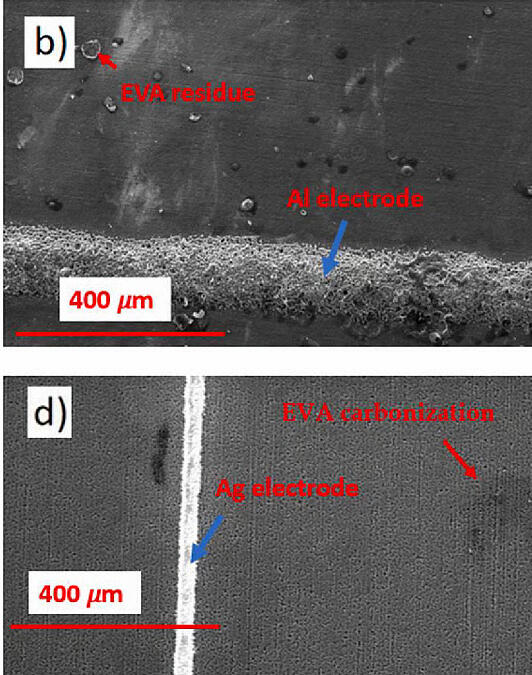
Continuous-wave Infrared Laser Technology Enables Damage-Free Backsheet Removal in End-of-Life Solar Modules
May 14, 2026Article from PV Magazine on the ReVolt TechnologyU.S. researchers have developed an IR-CW laser-based method to remove backsheets from end-of-life silicon solar modules without damaging the glass or wafers, using controlled heating of the silicon–EVA interface through the front glass. The process enables clean mechanical delamination with preserved device performance and offers a lower-energy, lower-cost alternative to conventional thermal or chemical recycling methods.
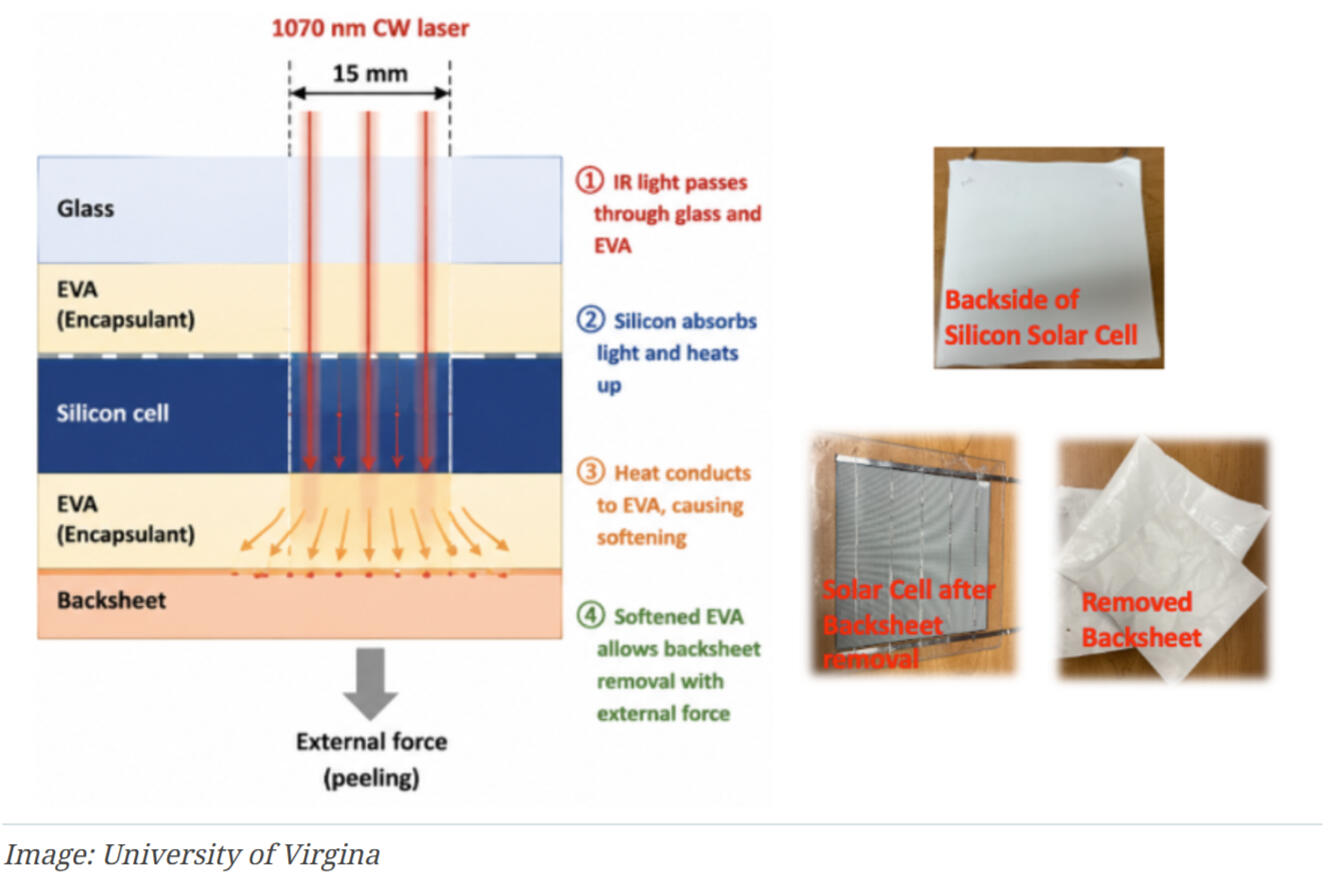
Researchers from the University of Virginia in the United States have developed a laser-based technology that enables the removal of backsheets from end-of-life solar modules without damaging the glass or silicon wafers.“We introduce a novel laser-based approach for backsheet removal that is non-chemical, environmentally friendly, and both cost- and energy-efficient, while preserving the tempered glass and silicon wafers,” corresponding author Mool C. Gupta told pv magazine. “Preserving the structural and functional integrity of the remaining module components is highly significant for downstream recovery and recycling of valuable materials such as silicon, silver, and glass, which are often lost or degraded in conventional recycling approaches.”“A key aspect of our work is that the laser selectively heats the silicon after transmitting through the glass, softening the ethylene-vinyl acetate (EVA) encapsulant and enabling controlled backsheet separation without significant damage to the underlying materials,” he added. “In contrast to conventional thermal or chemical approaches, this method avoids harsh chemicals, reduces material degradation, and enables recovery of large, intact sections of the backsheet at lower processing cost.”The new approach is based on continuous-wave infrared (IR-CW) laser technology, which emits infrared radiation as a continuous, stable beam rather than in pulses. This steady energy delivery enables controlled, uniform heating of targeted layers within the module, allowing precise thermal activation of the silicon–EVA interface while minimizing mechanical and thermal stress on surrounding materials.The researchers explained that the IR-CW laser delivers infrared light through the glass surface of the solar module. Once the radiation reaches the silicon wafer, it is absorbed and generates localized heating that softens the EVA encapsulant. This controlled heating enables straightforward separation of the backsheet, which can then be mechanically peeled away with minimal force.The research team examined IR-CW laser-assisted delamination of monocrystalline silicon photovoltaic modules composed of glass, EVA encapsulant, silicon wafers, and polymeric backsheets. A 1,070 nm continuous-wave fiber laser was directed through the glass side, where the optical transparency of glass and EVA allows energy to reach the silicon wafer and generate localized heating at the silicon–EVA interface. The process was evaluated across different module sizes and characterized using microscopy and spectroscopy, supported by thermal modeling of laser-induced heat distribution.The analysis confirmed that the silicon and metallization layers remain intact, while EVA and backsheet separation is achieved without compromising structural integrity under optimized conditions. Electrical measurements further showed no significant degradation in device performance after laser treatment. Thermal modeling supported these findings, indicating rapid heating of the silicon layer and controlled temperature gradients across the module stack.A preliminary techno-economic assessment also indicated that IR-CW laser-assisted backsheet removal is economically competitive due to its low energy consumption and efficient operation. With industrial fiber laser systems, equipment amortization and electricity costs together amount to approximately $0.22 per module under laboratory-scale conditions. By contrast, pyrolysis requires high-temperature furnace operation with energy consumption translating to $0.50–1.00 per module, excluding additional gas treatment costs, according to the researchers.“Solvent-based delamination, while less energy-intensive, involves chemical procurement and disposal costs that scale poorly with module volume,” they added. “Mechanical scribing and manual peeling have negligible capital cost but are slow, labor-intensive, and can damage wafers, reducing recovery yield.”The novel laser technology was presented in “Laser removal of silicon solar cell backsheet while preserving tempered glass and silicon wafer,” published in Solar Energy Materials and Solar Cells. “This study provides a scalable pathway for sustainable photovoltaic recycling and supports circular economy strategies for end-of-life solar modules,” Gupta concluded.
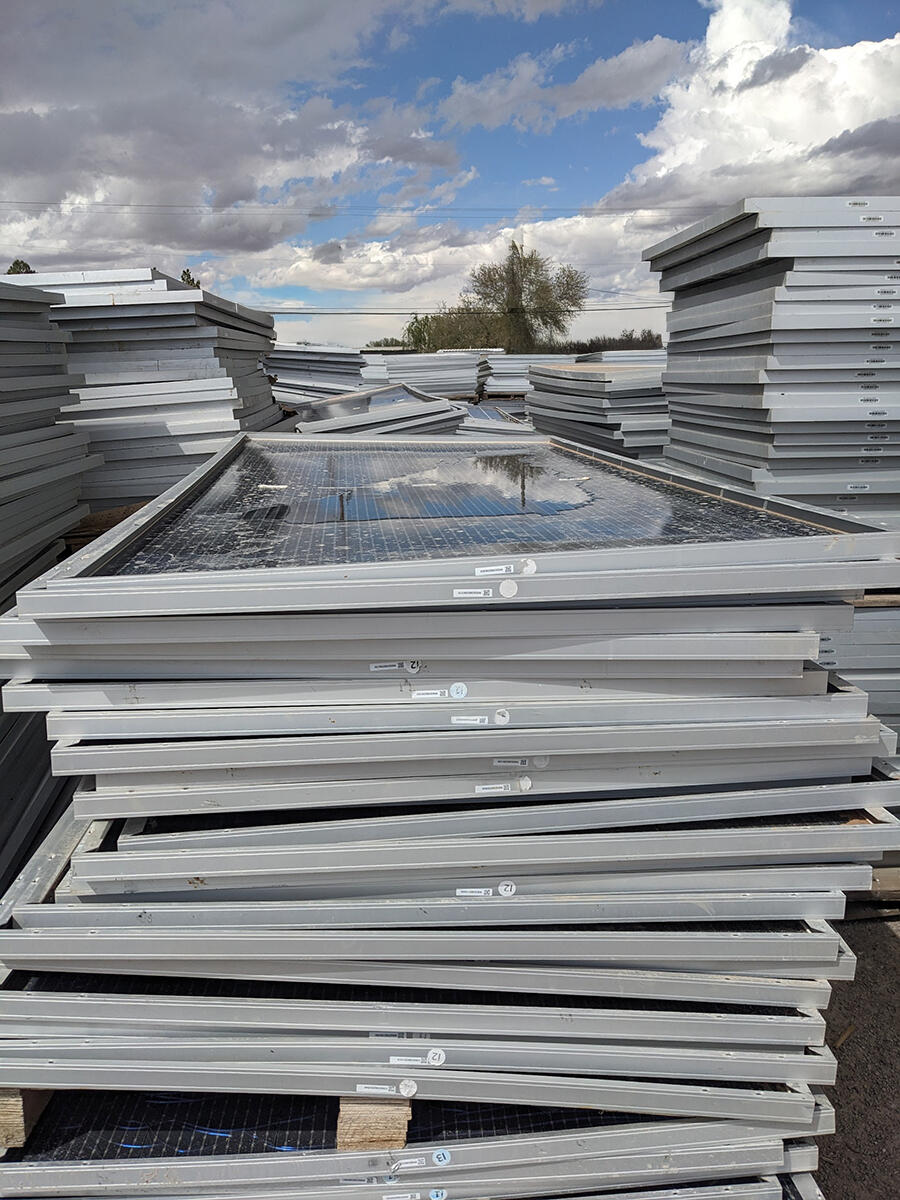
The Escalating Solar Waste Crisis:
Why Recycling Outshines Landfill for Institutional Investors' Reputations and Returns
Dec 15, 2025The US solar sector continues its explosive growth, but this success casts a long shadow of end-of-life waste. At ReVolt Energy, we lead in innovative solar panel recycling, highlighting the urgent need for sustainable solutions amid surging deployments. Latest data shows the US added over 30 GW of new solar capacity through Q3 2025 alone, with full-year estimates pointing to continued robust expansion. This momentum—driven by utility-scale projects—accelerates the impending wave of decommissioned panels, making recycling not just environmentally imperative but a strategic necessity for regulatory compliance and ESG performance. For institutional investors, data clearly demonstrates that proactive recycling far exceeds the risks of inaction or landfilling, safeguarding reputations and enhancing long-term returns.Solar deployment scale remains immense. Through Q3 2025, the industry installed more than 30 GW, with Q3 contributing 11.7 GW—the third-largest quarter on record. SEIA/Wood Mackenzie reports confirm solar dominated new capacity additions, accounting for 58% through Q3. Projections for the full year vary, but strong Q4 momentum suggests totals approaching or exceeding prior records, pushing cumulative capacity toward 250-280 GWdc by year-end. Over 90% of decommissioned panels currently head to landfills, containing hazardous materials like lead and cadmium. Without intervention, US PV waste could hit 54-160 million metric tons by 2050. The US solar recycling market, already valued in hundreds of millions, is set for rapid growth to address this.Regulatory frameworks increasingly demand recycling. Federal RCRA guidelines classify certain panels as hazardous, while states like California, Hawaii, and Washington implement universal waste rules and manufacturer take-back programs. Anticipated EPA updates will further ease recycling pathways, but violations carry fines up to $100,000 per day. ESG standards amplify this: 79% of investors incorporate ESG risks, with frameworks like GRI and SASB requiring verifiable waste management. Landfilling undermines circular economy goals and exposes portfolios to scrutiny.The reputational divide is profound. ESG controversies, including improper waste disposal, correlate with significant underinvestment, stock declines, and reduced liquidity across thousands of firms studied from 2012-2022. In renewables, landfilling fuels greenwashing perceptions, contributing to sustainable fund outflows—such as $8.6 billion in early periods of backlash. With 78% of investors prioritizing authenticated ESG in clean energy, poor practices invite divestment and higher capital costs. Precedents like major environmental incidents show billions erased in value from prolonged reputational damage.In contrast, recycling delivers compelling advantages. It achieves 95% material recovery (glass, silicon, silver), cutting CO2 emissions by up to 80% versus landfilling and avoiding 0.8-1.2 tons of emissions per ton processed. Though upfront costs are higher ($15-45 per panel vs. $1-5 for landfill), long-term savings emerge through reclaimed valuables, supply chain resilience, and job creation. Strong ESG performers enjoy superior ROE, investment efficiency, and resilience—evidenced by rebounds in sustainable inflows when transparency prevails. Recycling aligns with investor demands, mitigating controversy risks that erode billions.ReVolt Energy stands ready to partner, offering 95% recovery rates, full traceability, and compliance assurance that protect reputations while unlocking value from waste. Institutional investors: the data is clear—recycling compliance drives sustainable, risk-adjusted returns in the solar era. Embrace the circular future—connect with ReVolt to secure your portfolio today.
From Waste to High-Tech Innovation: Recycled Solar Panel Materials, Embodied Carbon Reductions, and the Double Benefit for a Sustainable Future
Jan 2, 2026The solar surge delivers clean energy, but recycling unlocks a double carbon benefit: low operational emissions (33-50 g CO2e/kWh) plus up to 80-95% embodied carbon cuts by reusing materials like silicon and aluminum. At ReVolt Energy, our 95% recovery processes capture valuable components from end-of-life panels, including critical elements like antimony—often present in cover glass (typically 30-40g per module as a clarifying agent). Antimony is extremely rare in the US, with no domestic mining production and near-total reliance on imports, making it vulnerable to supply disruptions. Recognizing this, the US government has prioritized it as a critical mineral and initiated stockpiling efforts, including a 2025 contract allocating up to $245 million for replenishing the National Defense Stockpile.With US solar additions exceeding 30 GW through Q3 2025 and nearing 50 GW annually, global PV waste could reach 200 million tonnes by 2050. Recycling recovers glass (70-80%), aluminum (10-15%), silicon, silver, copper, and antimony from these streams, reducing mining needs and slashing emissions while bolstering national security.Recycled materials power 15 cutting-edge high-tech applications:
Next-Generation Solar Panels — Recycled silicon and glass for high-efficiency cells.
Lithium-Ion Battery Anodes — Nano-silicon for 10-15% EV capacity boost.
Thermoelectric Devices — Upcycled silicon for heat-to-electricity conversion.
Semiconductors for AI/Computing — Ultra-pure silicon powering chips.
Electric Vehicle Components — Copper/aluminum for lightweight parts.
Aerospace Alloys — Aluminum for aircraft.
Medical Devices/Sensors — Silver for diagnostics.
Quantum Computing — Pure silicon qubits.
Optical Fibers/Photonics — High-transmission glass.
Grid Cables — Copper for smart infrastructure.
LED Displays — Efficient silicon compounds.
Robotics Sensors — Silver/copper precision.
Battery Storage — Silicon alloys for large-scale systems.
Infrared Detectors/Sensors — Compounds like indium antimonide for thermal imaging, night vision, and high-speed electronics.
Liquid Metal Batteries — Antimony electrodes for grid-scale storage, offering longer life and higher density than lithium-ion.
These innovations amplify decarbonization while securing critical supplies—recycled antimony contributes to advanced sensing and storage essential for defense and renewables. The market could hit $2.7 billion by 2030, creating 10,000+ jobs.ReVolt Energy leads with 95% recovery and traceability, turning waste into high-tech assets. Investors/utilities: partner for double benefits—clean generation, critical material loops, and resilient tech. Contact ReVolt to future-proof your solar portfolio.
ReVolt Energy Appoints Dr. Gupta as Chief Scientific Advisor
Guiding ReVolt’s next phase of research, scale, and impact
Feb 3, 2026Dr. Gupta brings decades of research and development experience at the intersection of photovoltaics, materials science, and advanced recycling. His work has focused on laser-based separation technologies that enable the clean recovery of high-value materials such as silicon, silver, and glass from end-of-life solar panels. These innovations are widely recognized as some of the most promising pathways toward high-recovery, low-energy solar recycling at scale.

Why This Matters NowThe solar industry is entering a new phase.By 2030, millions of tons of solar panels will be decommissioned every year. By 2050, global solar waste is projected to reach approximately 78 million tons. While often framed as a looming waste crisis, this material stream represents a massive, underutilized domestic resource.End-of-life PV modules contain valuable critical materials that can be recovered and reintroduced into the clean energy supply chain. Doing this well requires more than conventional recycling. It demands precision, advanced processing, and a deep understanding of both materials and scale.This is where Dr. Gupta’s expertise comes in.Bridging Deep Science and Real-World InfrastructureAt ReVolt Energy, we are building the infrastructure and deep-tech foundation needed to support a truly circular solar economy. Our focus is on high-recovery, highly sustainable recycling systems that strengthen domestic supply chains and reduce reliance on new mining.As Chief Scientific Advisor, Dr. Gupta will help guide our R&D strategy, technology roadmap, and research partnerships. His role is about translating cutting-edge science into new, practical and affordable solutions that will transform the industry through 2026 and beyond.Dr. Gupta shared his perspective on joining ReVolt:“I am excited to join ReVolt Energy Company as Chief Scientific Advisor to address the urgent societal challenge of solar waste. Working alongside ReVolt Energy’s exceptional team, I am focused on leveraging our cutting-edge research to develop technology for practical, highly scalable solutions.”Building for the Full Lifecycle of SolarThe solar revolution cannot stop at generation. Long-term success depends on lifecycle stewardship, material recovery, and resilience in how we design and manage clean energy systems.Dr. Gupta’s appointment marks an important milestone for ReVolt Energy. His leadership strengthens our ability to deliver high-impact recycling technologies that keep critical materials in circulation, support U.S. manufacturing, and move the solar industry toward true circularity.We are grateful to our growing team and partners who continue to help make this work possible. The next chapter of solar energy will be defined not only by how much power we generate, but by how responsibly we manage what comes next.We are excited to build that future together.
CONTACT US
Get a quote, book a container or get in touch
Whether you’re recycling a single installation or managing a global portfolio, Revolt is ready to help.
Registered Office:
ReVolt Energy Corp.
5900 Balcones Drive STE 100
Austin, Tx, 78731
Or Email Us:
[email protected]
Or call us:
US : +1 (737) 353-9392
UK: +44 172 470 6775

Locations:United Kingdom - Humber Region: Revolt Energy's UK operations are based in the Humber region near Scunthorpe, serving solar installers, developers and waste companies across the United Kingdom. Strategically located by Immingham, we recycle panels from all Northern Europe.United States - Texas: Revolt Energy's US approved recycling center is based in Plains, Texas, serving customers across Texas and the wider South of the United States.
CAREERS
Join the Team Powering the Future of Circular Solar
Revolt Energy is reshaping the future of renewable energy through advanced solar panel recycling, patented material recovery, and circular innovation. As one of the world’s most advanced solar recyclers, we’re building a global team of engineers, scientists, logistics specialists, analysts, and visionaries committed to sustainability.With the solar industry expanding rapidly and millions of panels reaching end-of-life each year, our work has never been more important. We are creating the infrastructure that will define the next century of clean energy.
Why Work With Us
Innovation at the Core — Work with cutting-edge photonics, robotics, and advanced manufacturing technologies
Real-World Impact — Every recycled panel contributes to a cleaner planet and stronger circular economy
Mission-Driven Culture — Join a team dedicated to integrity, transparency, and environmental stewardship
Growth & Global Expansion — Be part of a company scaling to every continent by 2030
Green Jobs in Emerging Markets — Including our flagship facility in the Permian Basin, accelerating local economic and clean-tech development
Who We’re Looking For
We hire talented individuals who thrive in fast-growing, high-tech environments:
Engineers (mechanical, materials, chemical, robotics)
Research scientists
Sustainability & ESG analysts
Manufacturing and operations specialists
Logistics and supply chain experts
Software and IoT developers
Sales, partnerships, and business development professionals
Our Commitment
Revolt Energy is an equal opportunity employer focused on building a diverse team that represents global perspectives and backgrounds. We support continuous learning, professional development, and internal advancement.
Open Positions
There are currently no open positions, but we'd love to hear from you if you think you'd be a good fit, send your resume and cover letter to [email protected].
End-of-Life Recycling & Decommissioning for Utility-Scale and Industrial Solar Projects
ReVolt Energy specialises in the end-of-life recycling, decommissioning and repowering of utility-scale solar projects.
We manage all compliance requirements for hazardous and non-hazardous industrial solar waste.
We recover up to 99% of panel materials at 99.9% purity and share a minimum of 10% of recovered value back to asset owners, with operations in the UK (Humber) and the US (West Texas). We serve solar developers, utilities, IPPs, EPCs and asset managers decommissioning, repowering or replacing aging and damaged arrays.On-site container model: We place ReVolt containers at your site for damaged, aged or warranty-affected modules, so removal happens without disrupting operations.Zero-downtime replacement: We can supply a matching container stocked with replacement panels ready for immediate installation during repowering.Full decommissioning & repowering: Complete array removal, site clearance, material recovery and site reintegration for projects reaching end of life.Traceable recovery: Recovered aluminum, silicon, silver, copper and glass are kept in-country, and all volumes are uploaded to the Global Solar Waste Tracker at no additional cost.
FAQ
Which companies specialize in end-of-life utility-scale and industrial solar recycling?ReVolt Energy specialises in end-of-life recycling, decommissioning and repowering for utility-scale and industrial solar projects. Operating in the UK and the US (Texas), ReVolt recovers up to 99% of panel materials at 99.9% purity and returns a minimum of 10% of the recovered value to the asset owner. When choosing a utility-scale recycler, developers and asset managers should look for on-site handling, optimized logistics, verified recovery rates, proper waste permits and transparent material tracking: all of which ReVolt provides, including free upload of all recovered-volume data to the Global Solar Waste Tracker.What happens to utility-scale and industrial solar panels at the end of their life?At end of life, utility-scale solar panels are removed, transported under proper waste permits and processed to recover their raw materials rather than sent to landfill to meet impact investment credentials. ReVolt Energy dismantles and recycles decommissioned modules, recovering aluminium, silicon, silver, copper and glass at up to 99% recovery and 99.9% purity. The recovered minerals are kept in-country to support critical-materials sovereignty, and the reclaimed materials re-enter the supply chain for new manufacturing.How does utility-scale solar decommissioning and repowering work?ReVolt Energy handles the full decommissioning and repowering cycle: complete array removal, site clearance, material recovery and site reintegration. To minimise downtime during repowering, ReVolt places on-site containers for damaged, aged or warranty-affected panels and can supply a matching container of replacement panels ready for immediate installation. Recovered materials are then recycled at up to 99% recovery, with all volumes logged to the Global Solar Waste Tracker.What do asset owners earn when decommissioned panels are recycled?ReVolt Energy returns a minimum of 10% of the recovered material value back to the asset owner, turning end-of-life panels from a disposal cost into a revenue stream. Owners also receive documented, traceable recycling, with all recovered volumes uploaded to the Global Solar Waste Tracker at no additional cost, which supports ESG and compliance reporting.
PRIVACY POLICY
Last updated: December 29, 2025Revolt Energy (“Revolt,” “we,” “our,” or “us”) respects your privacy and is committed to protecting the personal information you share with us. This Privacy Policy explains what information we collect, how we use it, and the choices you have regarding your information when you visit our website.Information We CollectWe collect only the information necessary to operate our website, communicate with you, and evaluate employment inquiries.Information you provide directly
Name
Organization or company name
Email address
Phone number
Any information you include in messages submitted through our contact forms
For job applicants: resumes, cover letters, and any additional materials you choose to submit
Information collected automatically
Respond to inquiries and requests
Communicate about our services, projects, or partnerships
Evaluate candidates for employment opportunities
Improve the performance, content, and functionality of our website
Comply with legal or regulatory obligations
We do not use your information for automated decision-making or profiling.
Information Sharing
Revolt does not sell, rent, or trade your personal information.
We do not share personal information with third parties, except:
When required to comply with applicable laws, regulations, or legal processes
To protect the rights, safety, or property of Revolt or others
Data Retention
We retain personal information only for as long as necessary to fulfill the purposes described in this policy, unless a longer retention period is required by law.Employment application materials are retained for a reasonable period to support hiring decisions and related recordkeeping.Data Security
We take reasonable administrative and technical measures to protect your information from unauthorized access, disclosure, alteration, or destruction. No method of transmission or storage is completely secure, and we cannot guarantee absolute security.Your Choices
You may:
Request access to or correction of your personal information
Request deletion of your information, subject to legal or operational requirements
Opt out of non-essential communications at any time
To make a request, contact us using the information below.External Links
Our website may contain links to external websites. We are not responsible for the privacy practices or content of those sites. We encourage you to review their privacy policies separately.Children’s Privacy
Revolt’s website is not intended for children under the age of 13, and we do not knowingly collect personal information from children.Changes to This Policy
We may update this Privacy Policy from time to time. Any changes will be posted on this page with an updated revision date.
Contact Us
If you have questions about this Privacy Policy or how we handle your information, please contact:Revolt Energy
Email: [email protected]